Or
If everybody ate mostly meat, why didn’t everybody have Scurvy?
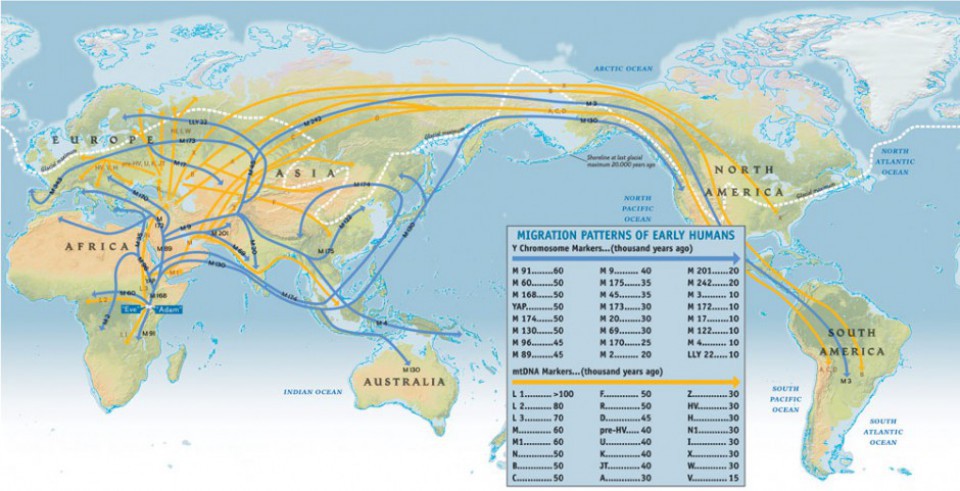
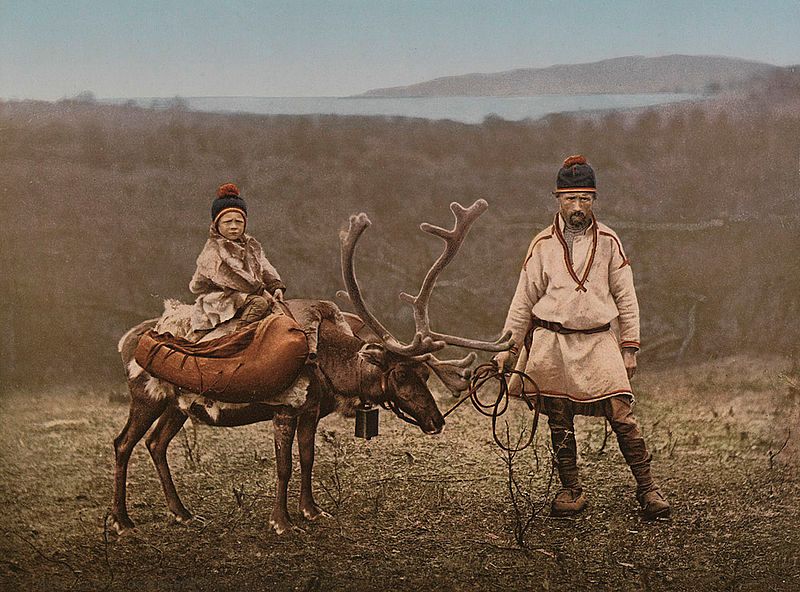
I repeatedly make reference to the idea that, for at least the last fifty thousand years or so (the time period which many of our ancestors have occupied Europe), Mankind has had to deal with winters and therefore the complete lack of fruits and vegetables through many months of the year. The question left hanging in the air is – “If early hunters and gatherers really had very little food other than meat through the winters, how did they get their essential vitamins and minerals?” In particular, what kept our ancestors from scurvy and other “nutrition deficiency” diseases? Certainly not all peoples settled in vegetation challenged areas, but those that did still managed to not only survive, but thrive. The thrust of my point being that a majority of Americans have ancestry of Northern European origins, and therefore have an evolutionary background of seasonal “gathering”, versus the heritage of year-round access to vegetables and fruits as in more tropical regions.

A little research on Scurvy (which is bone and connective tissue deterioration due to lack of Vitamin C) shows that it generally begins after about 3 months of total deficiency. Early sailors exploring the New World by ship soon found that a diet solely of meat and gruel (flour or oats with salt and water) led to very ill sailors. But if that’s the case, how can we explain numerous Arctic peoples living very healthy lives on fresh fish and meat alone?
As you might imagine, there has been quite a bit of research on the subject of diets in the northern latitudes, and the bottom line is this: Eating the organs and connective tissue of animals generally provides more than adequate doses of Vitamin C, (and many other plant based nutrients!) – Mainly because most of the larger meat bearing animals (caribou, deer) eat grasses, and thereby are naturally “nutrient enriched”. The liver is a prize, and eating it raw is preferred in most cases (it also means none of the nutrients are “cooked” out). Also, the natural fats in the animals are at a premium (whale and seal blubber being the best), and are as important to overall health as the meat itself. There are written accounts of early explorers and trappers having plenty of rabbits to eat, but they were still withering away from malnutrition. It turns out that the rabbits were just too lean, and once some other fat source was found, their health returned.
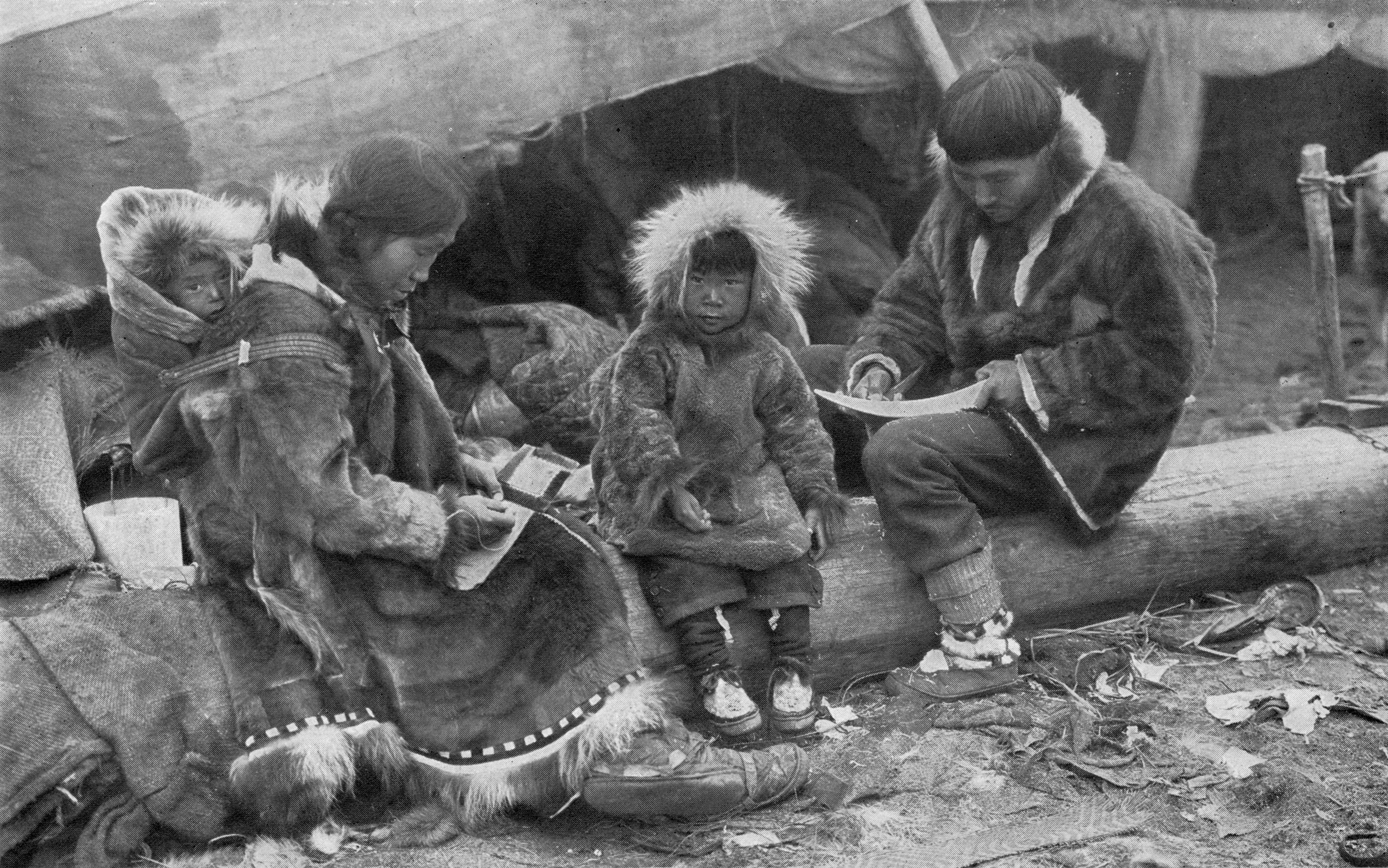
There was a very well researched, and well written article in Discover Magazine Oct 2004 by Patricia Gadsby and Leon Steele called The Inuit Paradox (http://discovermagazine.com/2004/oct/inuit-paradox) which talked about various diets that seemed to defy common dietary wisdom. Here are a few thoughts from it that are enlightening:
“What the diet of the Far North illustrates, says Harold Draper, a biochemist and expert in Eskimo nutrition, is that there are no essential foods—only essential nutrients. And humans can get those nutrients from diverse and eye-opening sources.
One might, for instance, imagine gross vitamin deficiencies arising from a diet with scarcely any fruits and vegetables. What furnishes vitamin A, vital for eyes and bones? We derive much of ours from colorful plant foods, constructing it from pigmented plant precursors called carotenoids (as in carrots). But vitamin A, which is oil soluble, is also plentiful in the oils of cold-water fishes and sea mammals, as well as in the animals’ livers, where fat is processed. These dietary staples also provide vitamin D, another oil-soluble vitamin needed for bones. Those of us living in temperate and tropical climates, on the other hand, usually make vitamin D indirectly by exposing skin to strong sun—hardly an option in the Arctic winter.…
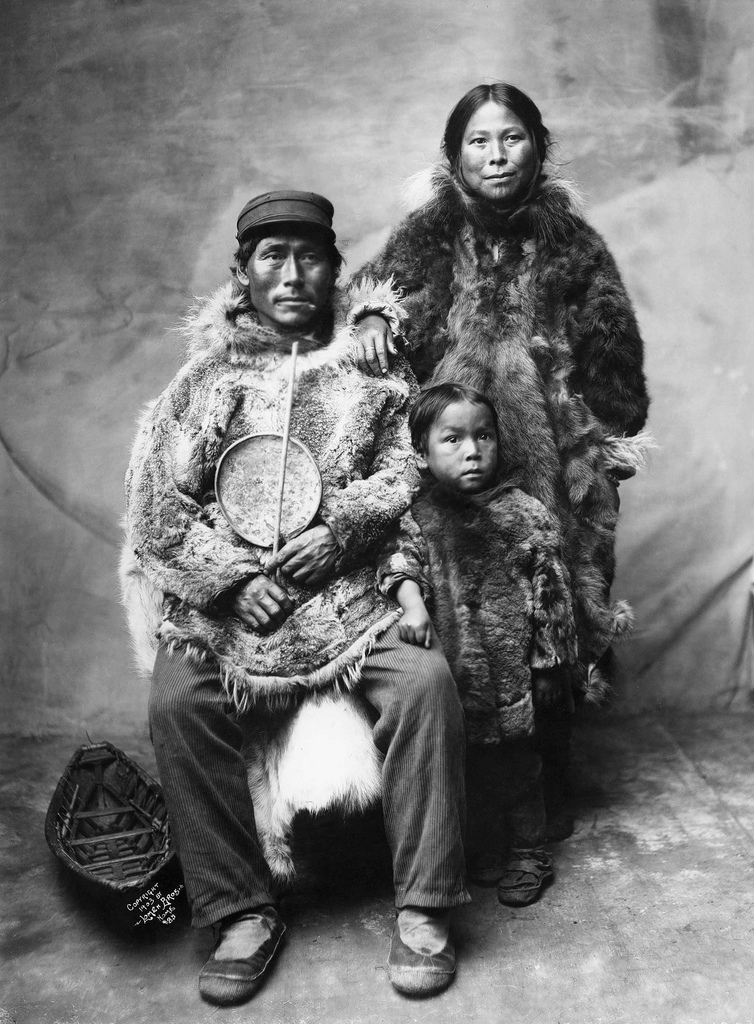
As you might guess from its antiscorbutic role, vitamin C is crucial for the synthesis of connective tissue, including the matrix of skin. “Wherever collagen’s made, you can expect vitamin C,” says Kuhnlein. Thick skinned, chewy, and collagen rich, raw muktuk can serve up an impressive 36 milligrams in a 100-gram piece, according to Fediuk’s analyses. “Weight for weight, it’s as good as orange juice,” she says. Traditional Inuit practices like freezing meat and fish and frequently eating them raw, she notes, conserve vitamin C, which is easily cooked off and lost in food processing.…
Loren Cordain (a professor of evolutionary nutrition at Colorado State University at Fort Collins) reviewed the macronutrient content (protein, carbohydrates, fat) in the diets of 229 hunter-gatherer groups listed in a series of journal articles collectively known as the Ethnographic Atlas. These are some of the oldest surviving human diets. In general, hunter-gatherers tend to eat more animal protein than we do in our standard Western diet, with its reliance on agriculture and carbohydrates derived from grains and starchy plants. Lowest of all in carbohydrate, and highest in combined fat and protein, are the diets of peoples living in the Far North, where they make up for fewer plant foods with extra fish. What’s equally striking, though, says Cordain, is that these meat-and-fish diets also exhibit a natural “protein ceiling.” Protein accounts for no more than 35 to 40 percent of their total calories, which suggests to him that’s all the protein humans can comfortably handle.…
Needless to say, the subsistence diets of the Far North are not “dieting.” Dieting is the price we pay for too little exercise and too much mass-produced food. Northern diets were a way of life in places too cold for agriculture, where food, whether hunted, fished, or foraged, could not be taken for granted. They were about keeping weight on.”
***
Here is OUR problem – Even with our best Paleo intentions: 1) We do not eat the whole animal anymore (at least I don’t), and 2) The fats that our beef contains are not from overindulging in lush green grasslands. Our cattle are fattened-up with corn and other unnatural grains in overcrowded feedlots. The result being that the “fats” that are marbled into most supermarket beef is, for all intents and purposes, the result of cattle overindulging in “candy” – and that “candy fat” is passed on to us (as if we didn’t have enough already). Alternatively, the fats in fish are high in omega-3 fatty acids – which almost all nutritionists agree is a beneficial thing (it is almost impossible to find blubber in the local supermarket). But even with larges doses of “fish fat” we would be hard pressed to come near the 35/65 protein/fat diet ratio that is deemed by many paleo nutritionists to be optimal. What we need to be truly Paleo is neither available – nor particularly desirable – by today’s culinary norms.
So what can we do? We can eat meat and fish, and we can take vitamins. And as for the vitamins – not necessary every day, maybe more like a couple of times a week. A good “multi” type works, and most of us don’t really need that much additional iron (red meat is high in iron). Oh, and yes, eat vegetables – just because they may not have been available to our ancestors year-round does not mean that their nutrients are not beneficial. I think it works out that we probably need far fewer supplements than the vitamin company scientists would like us to buy, but certainly more than none!
Also understand that we do not need exotic supplements. If the body needed exotic minerals to exceed, the Human race would never have evolved as it did – and the area from which the “secret” nutrients come, would be ruling the world. The needs of the Human body are relatively simple. If they weren’t dispersed fairly evenly, then mankind would not have flourished in the multitude of areas he has settled. Certainly the advent of wheat changed things, but for entirely different reasons – wheat does not come with much in the way of nutrients (see my post regarding the American Diet Dilemma), it is more of a “hamburger-helper” scenario. Over time, Mankind has proven quite brilliant in finding ways to extract real nourishment out of the prevailing flora and fauna – if not, he died there, or moved on. Very few animals, if any, evolved to cover the ecological niche of almost every continent, not even Humans would not have been able to do it if they had stringent or exotic dietary requirements.
A side note: We currently help in the subtle depletion of many of our most important vitamins and minerals through bad dietary and “other” social habits. Caffeine helps lower our magnesium levels – smoking, alcohol, and stress work to lower our Vitamin C stores – excess sugar intake affects Vitamins C, E, and B complexes. There are a host of others…
Lastly, there is that crazy, but factual sentence that the USDA uses in its Dietary Reference Intake Guide (http://www.nal.usda.gov/fnic/DRI/DRI_Energy/265-338.pdf). I quote it repeatedly when discussing sugars, but here it can be stated with a little more scope:
“The lower limit of dietary carbohydrate compatible with life apparently is zero, provided that adequate amounts of protein and fat are consumed.”
 Paleo-opolis