
The Up-Side:
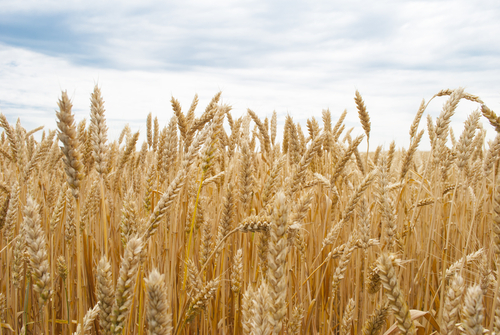
As Mankind began to disperse out of Africa about sixty thousand years ago, almost every type of food he encountered as he hunted or gathered, while slowly meandering towards “undiscovered” Asian and European lands, was new to him. Many of the animals were similar, but almost all the fruits and vegetables hanging from trees or hiding under the soil would have needed some kind of food “taste testing” process before they became part of the daily diet. There is no ‘natural’ marking to designate an edible food, assuming it’s even found.
When Humans first started making their way into the Fertile Crescent, they must have been amazed at all of the new types of foods – Figs, pomegranate, apples (very small), date palms, pistachio nuts, melons, olives … It was a different kind of paradise compared to Africa, it was an “Eden”.
And later, as they made their way northward in to Europe, the nutritional sources would change dramatically again. Now they moved into areas of tubers, berries, hazel nuts, mushrooms, and on – but without nearly as much variety as the year-round warmth that the Mesopotamian lands had provided (“Eden” left a lasting impression in the memories of Men).
Europe had real seasons, it had real snow, and winters were something entirely new to our ancestors. Here, it is important to remember that ancient man did not have the concept of the weather that we have now. He could not have known that direction of travel was related to change in temperature (as in further North = colder average temps). If anything, he probably would have related heat to where the sun rose, and where it set (East and West vs. N and S). The migration of European animals would be their only hint, but European patterns (snow related) would be different from African patterns (monsoon related). Maybe the Neanderthals helped them adapt to their new climate.
Obviously they did figure out seasonal changes, and they found enough food.
But during the forty thousand years or so that Homo sapiens has occupied Europe, his ratio of meat to veggies, and fruits, would have to have been heavily weighted towards the meat. No matter what his body would have liked, reality placed greenery into his diet for only about two-thirds of the year – and over those “harvest” months, they would find, and deplete many, many different vegetable sources – ultimately however, the cold winter months meant the end of edible greenery. The nuts that they gathered and stored in the fall months might have added a few more meals that weren’t meat related – but the main food, as a staple over the course of any given year, had to be animals – specifically, their Proteins and Fats.
You can imagine the excitement of all Mankind when it became known that there was a food you could “manufacture” from accumulated seeds. And that these seeds would grow where-ever you planted them. And best of all, when the paste from these seeds was heated with fire, it formed into a semi-hard “bread” which could then travel with you, and be eaten whenever you wished.
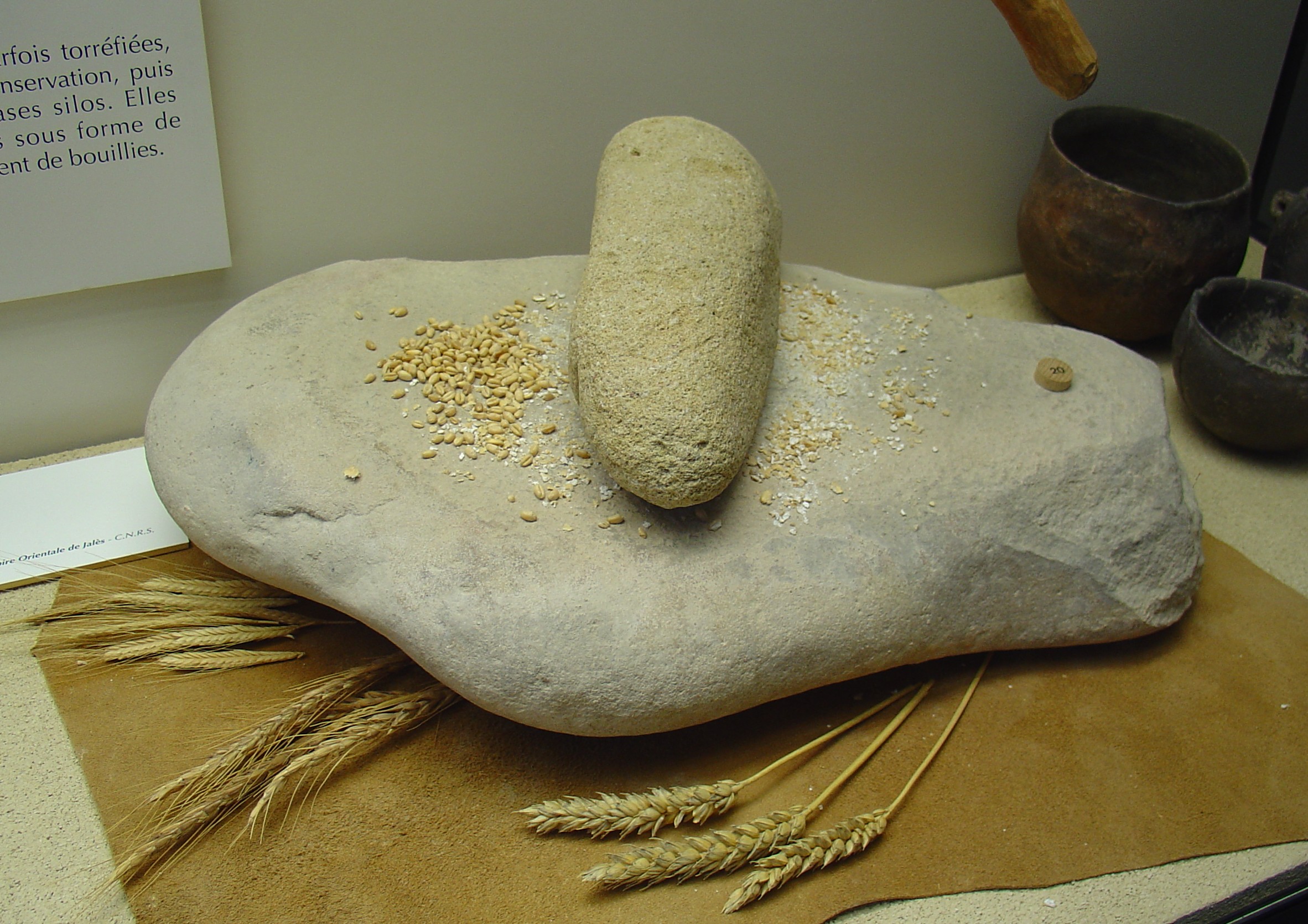
That first ‘new’ food was Wheat, a grass seed, and a grain. Grass seeds on their own are pretty small and uninteresting as a food source, but when thousands of them are gathered together and ground into a paste, they can become a meal – and they can be stored for future meals! That had never happened before – A way of ‘ensuring’ food into the future.
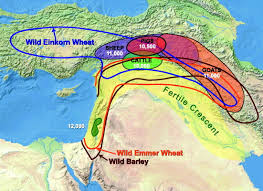
The first cultivation of wheat happened nearly twelve thousand years ago, in the Fertile Crescent (the people from the original migration who had remained in “Eden” became social and industrious farmers). The concept of ‘agricultural farming’ was probably quick to spread where farming was “easy”, but wasn’t truly refined on a major scale until many thousand years later when it helped feed the growth of a huge Persian Empire.
At nearly the same time as the Persians, wheat came to Egypt – where it helped fuel hundreds of thousands of pyramid laborers, a huge army, many large bustling cities, and yet, there was still enough left over for export!
Its further spread was first due to the conquests of Alexander the Great, who ate a particular type of emmer wheat called Zea because he thought it was much healthier for his soldiers than other grains. And then a few centuries later, came the Romans, and their need for even larger quantities of ‘portable’ food for their endless military campaigns and encampments (new research shows the spread of wheat farmers into Germanic areas a few thousand years prior to the birth of Roman culture – it is still hard to estimate how widespread its use was prior to their eventual repeated invasions, and inter-mingling from the south.
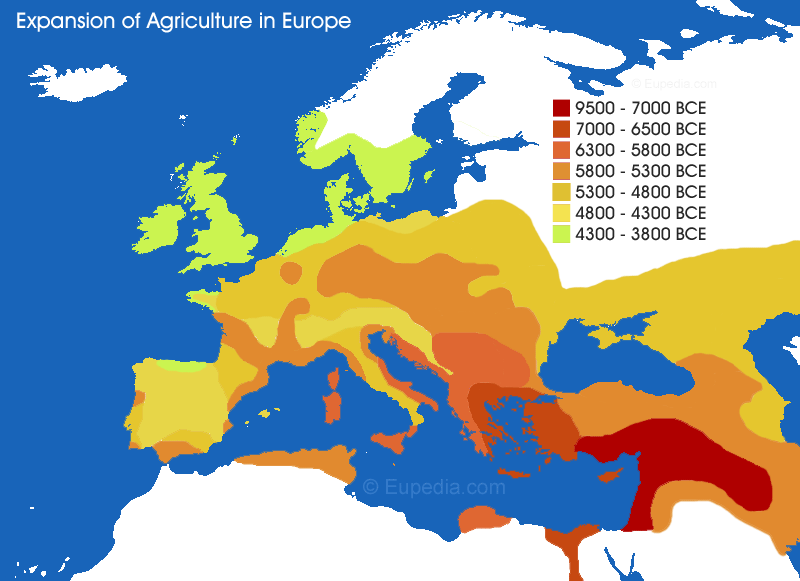
Still, at most, wheat has been a part of the mid-European diet for less than five thousand years.
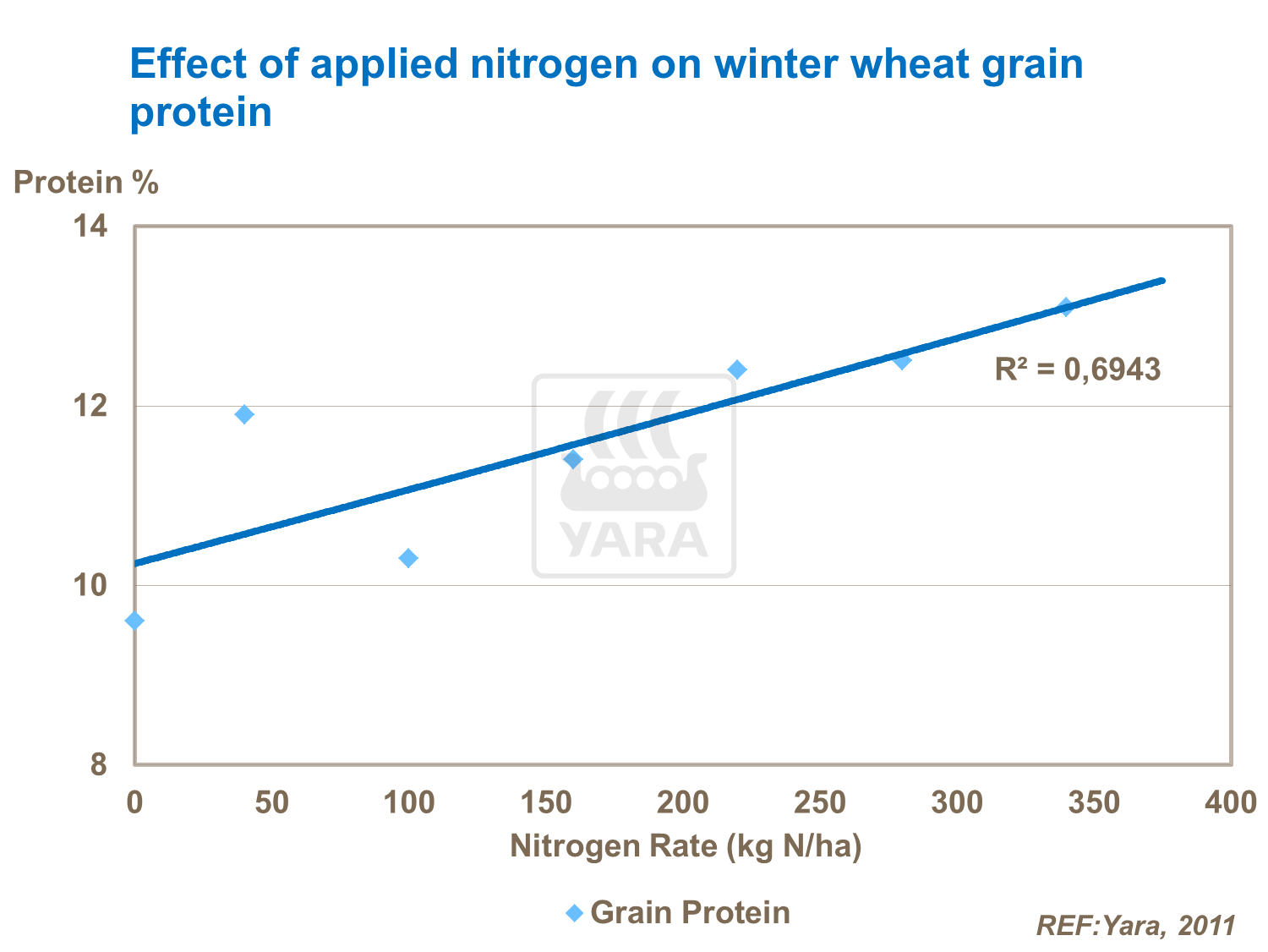
Whole-grain wheat is not a particularly efficient carrier of protein, but when compared to other major staple plants, it is one of the best. For example, Soybeans are near to wheat with 13%, then rice with 7%, corn at 3%, and potatoes at only 2%. Not bad, and wheat can be grown in more diverse conditions than most of the others.
The ability to make wheat into a malleable paste makes it the ultimate “food helper”. It can become a meal filler that can help any meat or vegetable look new, different, and maybe even more appetizing. It can become pasta, cake, pancakes, and waffles, cookies, pastries, and all the desserts that can help what would have been a small portion of meat and carrots, go a long, long, way.
So, for three million years there was NO wheat in the Human diet. It was a diet of proteins and fats, with occasional carbohydrates in the form of vegetables, seasonal fruit, or maybe honey. And then – Boom! – Wheat, the wonder food! Our first Human agricultural technology – first, because we cultivated it; and then, because we created tools to grind it, knead it, and bake it.
The Down-Side:
It shouldn’t be a surprise that nothing on earth wants its seeds to be eaten. Unless, of course, those seeds can be pooped out whole, and still be viable as seeds. To that end, almost every seed in nature is protected in some way. Generally, plants use fruit to lure animals, once the fruit is eaten, the intact seeds are spread. But, if the seeds are destroyed in the digestion process, the plant will fail to proliferate as a species, and it will die out.
Plants were not designed for Human purposes. They did not evolve with us in mind – if anything, it’s a tenuous symbiotic relationship. They are a relatively easy source of vitamins and minerals, versus having to hunt an animal that has eaten them – there is no loss in nutrients if you eat the animal instead, but the plants don’t run as fast.
We, just like plant-life, have evolved to take advantage of what the environment gave us. But don’t think for a minute that they are gladly sacrificing themselves for our benefit – or that nature intended any species to suffer for our betterment, be it animal or vegetable. We have harnessed nature in many ways – like agricultural and animal domestication, but nature is not defenseless. The object of any seed is to try to make sure that it grows into adulthood and can reproduce – nature just gave it chemical protection rather than claws.
So, what are Wheat’s defenses?
1) Wheat is mostly sugar – Grains, including wheat, brans, oats, and etc., are mainly Starch (usually 50 – 75% – it is the plants version of body fat, or stored sugar), 10 – 20% of Protein, and the rest is fiber, fat, and maybe a few minerals.
Starch is a carbohydrate, and carbohydrates are sugars. And in fact, 75% of the carbohydrates in wheat are of a very particular type – amylopectin A, a form of highly digestible carbohydrate that is more efficiently converted to blood sugar than any others. This affects how quickly the sugar can be distributed into the bloodstream – and how quickly it will trigger an insulin reaction.
A few slices of Wheat Bread, or even a hamburger bun, triggers as high an insulin reaction in your body as a Snickers Bar.
In effect, the pyramids were built, and the Roman army conquered the Known World, by supplementing their meat with a “food” that had the nutritional equivalent of a Snickers Bar.
Imagine feeding a legion of Roman soldiers 10,000 strong, every day, for hundreds of years, with wagons of food from Rome, 500 miles away. There were hundreds of groups of 10,000 soldiers each. They ate like locusts, and there could not have possibly been enough meat to go around. Wheat made large armies possible. Armies of men that bred like rabbits, fought like adolescents on a sugar buzz, and died young – actually, that’s probably a perfect army.
2) Lectins are sugar binding proteins that are found in high concentrations in grains. The Institute for Natural Healing website says:
While dietary lectins are known in the scientific and nutritional communities, most lay people and even many medical professionals don’t know about them.
Lectins are involved in food allergies/sensitivities, inflammation and autoimmune disease, just to name a few. For instance, lectins are linked to celiac disease. Even weight gain and low energy can be linked to lectins.
Whole grains, peanuts, kidney beans, and soybeans are high in lectins. Cow’s milk, nightshade vegetables (like potatoes and tomatoes) and some seafood also contain fairly high amounts of lectin. In fact, estimates are that about 30% of our foods contain lectins, and about 5% of the lectins we eat will enter our circulation.
Lectins are problematic because they are sticky molecules that can bind to the linings of human tissue, especially intestinal cells. In so doing, they disable cells in the GI tract, keeping them from repairing and rebuilding. Therefore, lectins can contribute to eroding your intestinal barrier (leaky gut).
Because the lectins also circulate throughout the bloodstream they can bind to any tissue in the body – thyroid, pancreas, collagen in joints, etc. This binding can disrupt the function of that tissue and cause white blood cells to attack the lectin-bound tissue, destroying it. This is an autoimmune response. The lectins in wheat for example, are specifically known to be involved in rheumatoid arthritis.
But why do only some people react to the lectins in foods while others can eat them with no apparent problems? There are two answers to this question. First, many people may be having problems but they just don’t realize it. For example, autoimmune thyroiditis could be caused by dietary lectins.
As another example, many of our patients who thought they had no food intolerance at all have experienced much improved energy and weight control when they eliminated wheat and dairy. They didn’t realize until after they eliminated these foods that they were being affected by them.
But certainly many people tolerate these foods — why?
The answer lies in the balance of gut flora and a person’s immune system. When you have adequate beneficial flora, it serves as a protective barrier against substances that travel through the intestines, including lectins.
Since lectins (complex sugar molecules) are not broken down by the digestive process, they bind to receptors in the intestine, allowing them, and other food particles to leach directly into the bloodstream. The body, in turn views these lectins and the food particles they bring with them, as dangerous invaders – and it initiates an immune response to get rid of them. A body that is in constant ‘immune response’ will act, pretty much, like a body with a chronic low-level cold. The body is forced to be in steady state of ‘recovery’.
3) Gluten is the protein that makes bread rise. Gluten is protein. When gluten dough is leavened with yeast, fermentation produces carbon dioxide bubbles, which, trapped by the gluten network, causes the dough to rise.
Gluten has the chemical ability to break down the microvilli in your small intestine. The microvilli act like brush hairs on cells that allow a cell to increase its surface area in order to absorb, or secrete better – depending on its particular job. When these ‘brushes’ are damaged, food particles can leech directly into your blood system (leaky gut syndrome) causing allergies and digestive problems – the extreme reaction to this damage being celiac disease. Celiac disease is when the microvilli can no longer absorb enough nutrients from your intestine – symptoms include chronic diarrhea and fatigue – and in lesser degrees, is sometimes diagnosed as irritable bowel syndrome (IBS), prompting gluten-free diets.
If a product has no gluten, then it also has no protein (unless it was added back in later). I have written a whole blurb on Gluten.
4) Phytic Acid is a mineral blocker that prevents the absorption of calcium, magnesium, iron, copper and zinc. Phytic Acid is found in the bran of all grains, as well as the outer coating of seeds and nuts. It binds with minerals so that the body can’t absorb these nutrients as well as it should.
From Ramiel Nagel at the Weston A. Price Foundation:
Phytic acid in grains, nuts, seeds and beans represents a serious problem in our diets. This problem exists because we have lost touch with our ancestral heritage of food preparation. Instead we listen to food gurus and ivory tower theorists who promote the consumption of raw and unprocessed “whole foods;” or, we eat a lot of high-phytate foods like commercial whole wheat bread and all-bran breakfast cereals. But raw is definitely not Nature’s way for grains, nuts, seeds and beans . . . and even some tubers, like yams; nor are quick cooking or rapid heat processes like extrusion.
Phytic acid is the principal storage form of phosphorus in many plant tissues, especially the bran portion of grains and other seeds. It contains the mineral phosphorus tightly bound in a snowflake-like molecule. In humans and animals with one stomach, the phosphorus is not readily bioavailable. In addition to blocking phosphorus availability, the “arms” of the phytic acid molecule readily bind with other minerals, such as calcium, magnesium, iron and zinc, making them unavailable as well. In this form, the compound is referred to as phytate.
Phytic acid not only grabs on to or chelates important minerals, but also inhibits enzymes that we need to digest our food, including pepsin, needed for the breakdown of proteins in the stomach, and amylase, needed for the breakdown of starch into sugar. Trypsin, needed for protein digestion in the small intestine, is also inhibited by phytates.
Through observation I have witnessed the powerful anti-nutritional effects of a diet high in phytate-rich grains on my family members, with many health problems as a result, including tooth decay, nutrient deficiencies, lack of appetite and digestive problems.
5) Note the teeth of any current society that is forced to live on a diet consisting of mainly grain products. Recently I saw an episode of a new ‘reality show’ on Cable regarding Amish youth leaving their families for a view of the Larger World. Invariably, their teeth are rotten – in many cases, most of the teeth are pulled by the age of 19! There is your current grain fed diet.
The Early Egyptians, suffered from highly worn teeth from the sandpaper effect of early grains (and crude grain grinding techniques) on their molars, along with the accompanying abscesses and cavities
Evolution does not reward any species that loses its teeth at a young age. Fossils from Steppen’s time (and prior), that are not from the Mediterranean Area, show far more intact teeth than post-wheat societies. Ancient pre-wheat skulls are usually found with their teeth intact – not to say that chewing on bones or breaking nuts open with your teeth won’t damage them, it’s just a different kind of damage – it is a damage you won’t do to yourself twice – wheat damage is as slow as erosion in the desert, you don’t even know it’s happening so you don’t avoid it. Not many of Steppen’s food options would have ground the enamel off his teeth.
Conclusion:
So, here all of these negative things about wheat: Lectins disrupt your intestines, Gluten scours off the food receptors on your small intestine cells, Phytic Acid blocks the absorption of minerals into your bones and other organs, and the sugars in it send insulin racing through your bloodstream – and create fat. There must be something good or the FDA and USDA wouldn’t recommend it to us so highly – Right?
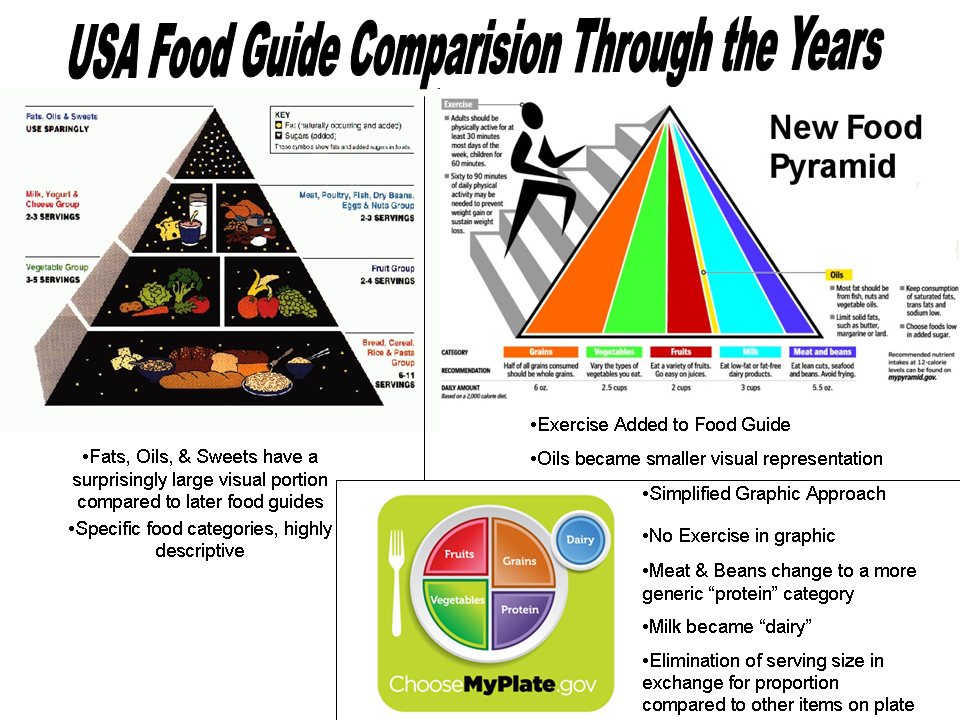
Not necessarily, it seems that the wheat industry (Monsanto, Archer Daniels Midland,…) is pretty influential in the FDA and USDA. You might note that The USDA food pyramid considers wheat to be a “staple of life”, and as one of the basic food groups. Personally, I don’t think the facts point to that particular conclusion. I think wheat is something useful to stretch food sources when they are scarce – and for most of its history it has been viewed (by people who have lots of meat and vegetables) as fairly benign.
I concede this – Even though it’s about a 2(or 3): 1 ratio of sugars to protein, there is protein. You just have to eat a lot of wheat to get it. And that’s what people do. It tastes good because it’s fluffy, and sweet, and it smells wonderful. And then, just as now, it is a relatively cheap crop to grow. So, a lot can be eaten. And it’s so malleable, it can be formed and shaped and embedded with other foods – almost endlessly.
It’s just not necessary. But if it is a major part of your diet, make sure you take a good mix of vitamins and minerals.
***
Extra
***
The major variety of wheat currently grown in the US, and around the world, was devised by Norman Borlaug, an American who was originally a microbiologist, and then became a geneticist and plant pathologist for the Mexican government. He was awarded the Nobel Peace Prize in 1970 for his work. He devised Dwarf breeds that stand about 2-3 ft. tall with a thick stalk supporting one large seed pod – it does not wave in the wind like it used to. But, since then, it has also been improved for increased Gluten production (as everyone loves light, fluffy pastry). Also, in 2002 Monsanto marketed a genetically altered wheat. Altered, so that Roundup herbicide could be sprayed directly upon it without killing the plant itself. The new wheat was rejected by farmers, not the FDA. Farmers feared that Asia and Europe would reject the grain, because they don’t allow GMO (Genetically Modified Organism) foods!
The direct gain for you is FAR MORE WHEAT – for everybody! Take note of how many aisles in your local supermarket are devoted to wheat products (and other grain by-products).
***
A last little thought on wheat: Wheat, and barley (grains), are the base for almost all the alcoholic drinks (except wine and vodka) – Why? Because sugar, with help – ferments. Wine and vodka use different sugars, but regardless of how they have been leavened – they have all become a kind of a liquid bread, and produce the same results as eventual fat on your waist (think beer-belly).
Once you realize that pasta, corn, beer, pizza, bread, power bars, breakfast cereals, and a lot of other great tasting things are wheat (or grain) related – and that grains are mostly sugar – obesity makes even more sense.
Note: There are 2 documentaries(special programs) regarding WHEAT currently making the rounds on Public Television (PBS). One is Grain Brain by David Perlmutter MD, and the other is Wheat Belly by William Davis MD – They have both written very thorough books on the subject, and having read them, I am fairly sure that most people will not finish either one (due to the density of material alone). The TV shows are much better at getting their information across, and of the two, I think Wheat Belly is the better one.
 Paleo-opolis