
Stretching, the Truth
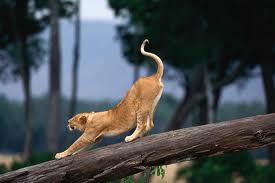
I was watching the cats stretch this morning. They are such lovely little beasties. It can be quite an elaborate exercise. First the long back arch, then a little body quiver, maybe one or two leg extensions, then it’s down for a long nap in the sun.
Their stretch was not meant as a prelude to a run – Maybe a stroll, but definitely not a run.
The current view of “stretching”, as part of the warm-up and prelude to sports, comes from a heightened interest in the technology of Sports Medicine that began in the 1980’s. Most of that interest seemed to follow the huge marketing dollars that Nike was pouring into the running shoe industry. All of the sudden, every runner, everywhere, was stretching out their calves, or Achilles, or quads against any object willing to stay stationary for a 30 second count.
The “pre-run stretch” was a basic tenant for all new runners. It was thought to be the first line of defense against leg-stress injuries. Stretching was the only preventative theory available that might keep you from becoming just one more, of the tens of thousands of runners (young and old, amateur and pro), who were now visiting doctors’ offices for stretched tendons, or a host of other new running-related injuries.
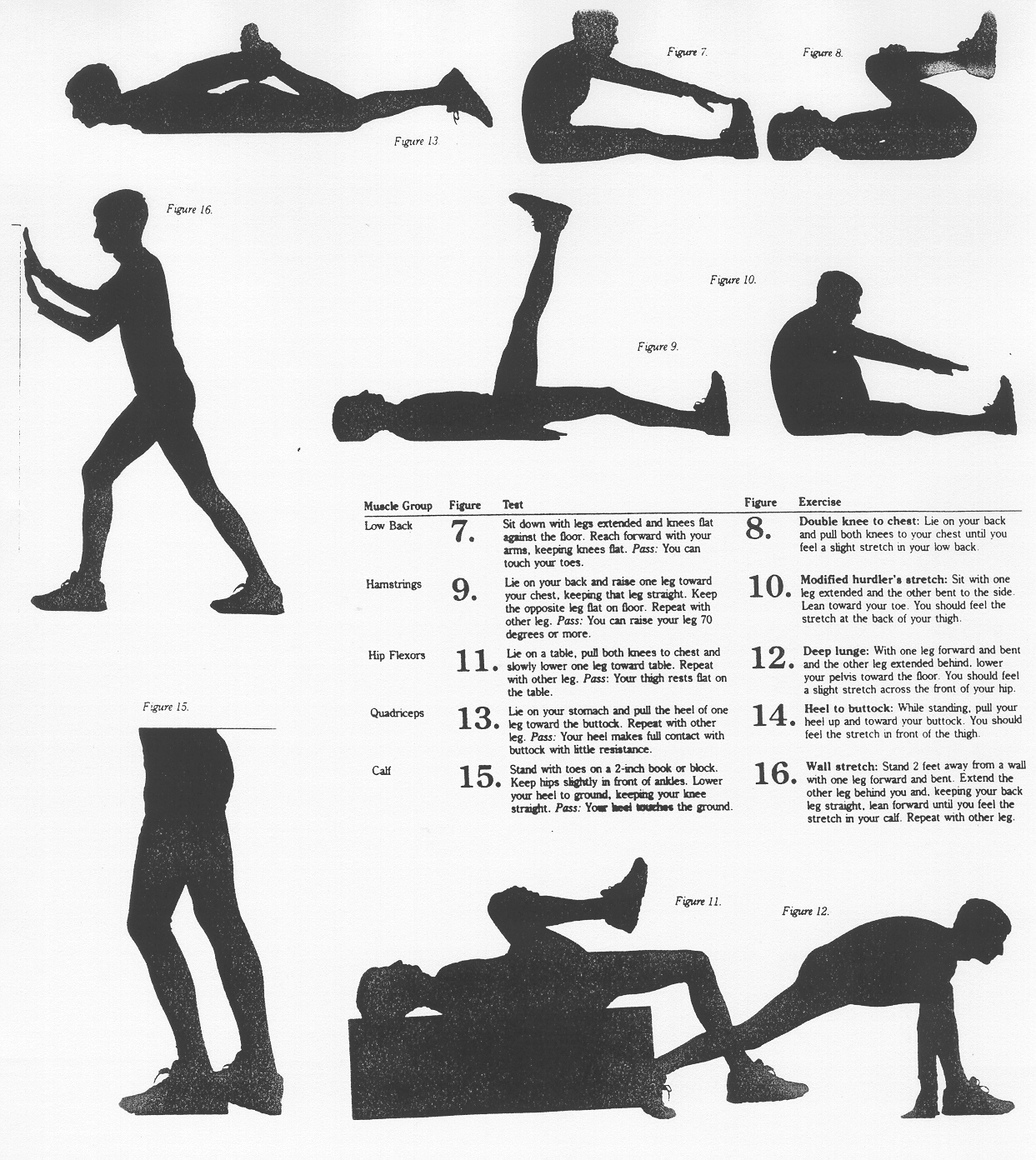
You would think all of that stretching would have helped, but – The number of medical facilities that can now make a living entirely from treating amateur sports related injuries is staggering. And, in spite of the staggering amount of dollars involved in sports “medicine” research, the trend doesn’t seem to be slowing.
I understand that there is a theory there – about “warming-up” the muscles, about loosening the tendons, about reducing injuries. But let’s look at it from a rational evolutionary perspective. If we are an animal, and no other animals stretch before they run, why might we suppose we are different? What drives this line of thought? The idea that being totally “relaxed”, makes you ready to run sounds a little counter to nature. As I watch the herds on the savannah (on TV), I don’t see a lot of stretching going on. Not even the lions. The predators I’ve seen, all look pretty intense, and ready to chase, and the prey, constantly lives on the edge of “ready to run”.
In fact, I have seen what seems to be, very uncomfortable positions held, for minutes on end, while waiting for their prey to be in the best position – not exactly something you would recommend for a runner as a pre-race ritual. And you know all predators have similar situations during the hunt.
We, just like all the other animals, survived because we could react to danger quickly. We have bodies that are specifically evolved to chase, or avoid, with minimal injury. Otherwise, even with our big brains, we would be one more extinct species – easy prey for bigger, faster, hungrier beasts.
For millions of years, the last one up the tree, was “it”! Ready or not.
So, what does the science say about the benefits of stretching?
An exhaustive web search failed to find any medical evidence that stretching before a physical activity does anything to help prevent injury.
There is a huge amount of evidence that a warm-up of some kind DOES help, some minor activity to get the blood circulating, but stretching comes out a little over-rated. Here were the main study points, and conclusions from a 2001 article in the Western Journal of Medicine website:
- Some people believe that a compliant muscle is less likely to be injured. From the basic science research, we find that an increase in tissue compliance due to temperature, immobilization, or fatigue is associated with a decreased ability to absorb energy. Although increased compliance is not the equivalent of stretching, no basic science research shows that an increase in compliance is associated with a greater ability to absorb energy.
- Most injuries are believed to occur during eccentric contractions, which can cause damage within the normal range of motion because of heterogeneity of sarcomere lengths. If injuries usually occur within the normal range of motion, why would an increased range of motion prevent injuries?
- Even mild stretching can cause damage at the cytoskeletal level.
- Stretching some-how increases tolerance to pain—that is, it has an analgesic effect. It does not seem prudent to decrease one’s tolerance to pain, possibly create some damage at the cytoskeletal level, and then exercise this damaged anesthetized muscle.
- Their conclusion: The strength of any literature review can be gauged by its ability to predict what future research studies eventually show. Much of medicine in general, and sport medicine in particular, is based on historical precedent. When historical precedents are based solely on hypotheses that have more recently been proved incorrect, clinicians must choose to continue treatment on the basis of a known incorrect idea of pathophysiology or change to a treatment based on current knowledge of pathophysiology and pathobiology. The potential side effects of any new treatment (likely to be unknown) must also be weighed against the potential side effects of the historical treatment (more likely to be known). The art, and even science, of medicine then becomes the ability to weigh all the available information at hand without discriminating a priori, and to be able to judge which is most appropriate for the patient.
For me, stretching is the equivalent of spreading the waist-band of your underwear is far as it will go, every day, before you put them on. And doing this in the hope it will make them fit tighter.
The tendons and joints are made to fit tightly, and with minimal elasticity. They are designed to help absorb the daily hard knocks of daily life. It is counter-productive to loosen them unless you are trying to deal with a specific muscle group for a specific injury, or other medical reason.
Again, NO animals stretch as a necessary precursor to running.
The concept of stretching the legs of a horse, prior to a race, would be silly. A horse warms up by running at a pace less than full speed. Horses run, it’s what they do – it’s what we all do. Does the antelope stretch before it flees the lion? Of course not, their muscles, like ours, are made to react instantly, and explosively – every time.
So – Warm up a little instead. Warm the joints and muscles with a little light movement for a few minutes – especially the areas you think that you will soon be stressing with activity.
 Paleo-opolis