
There are thirteen essential vitamins. Essential means that we must get them from an outside source. Vitamins are organic compounds that help almost all living things perform their bodily functions, some help hair grow, some are necessary for good vision – some, like vitamin C are necessary for teeth and gums to remain in your head (remember the stories of ship-board scurvy of old?). Since our body actually uses them (albeit in very, very, small quantities), they get “used-up”. And because we cannot create them through any internal process, they need to be replenished.
Plants and vegetables are a great source of vitamins because they have drawn them up out of the soil, with the water, as they grew – or the plants created (combined) them during the growing process. Another source would be to eat animals that have eaten plants and vegetables. Some, like Vitamin D can even be stimulated by sunlight alone (sometime I will discuss how sunglasses might affect this process).
Up until a few years ago, I would have said that we really didn’t require vitamin supplements, if we just got enough fruits and veggies.
Looking at the world through Steppen’s eyes has changed my view a little.
Steppen, and his tribe, ate more of the internal parts of the beasts that they killed, than we do. They ate the liver and other organs and they chewed the bones for marrow. And, since I have stated earlier that I don’t think they were able to find as many edible plants as we might think, this diet must have provided all the necessary nutrients, or they would not have survived.
They were not the picky eaters that we have become.
But has the high availability of fruit and vegetables saved us from having to eat “innards”?
I would say yes if not for a few issues I have regarding farming technology. Farming allows many different crops to be grown, in a given field, year after year, after year. But each year there are fewer and fewer vitamins and minerals remaining in the soil. Tilling takes care of this for a few decades, but what about a field that has been farmed for a hundred years. We talk about land in terms of what is its yield, or how fertile it is – Those are two different things, fertilizers can increase crop yield through the addition of potassium and nitrates, but they are un-able to recreate the rich, lush, chemical, mineral mix that the first few crops enjoyed. And think of hydroponics!
Foods that have been “vitamin enriched” are also a topic. Most of them have added vitamins (during processing) because they have absolutely nothing else to offer – vitamins are the only real selling point if the balance of your product is just grains and added sugar.
So… if you are on a low-carb diet, and you still aren’t a fan of fruit and veggies, what do you do?
You take vitamin supplements. Maybe not once a day, and maybe not with too much (or any) iron (because red-meat contains it already), but often.
**** **** **** ****
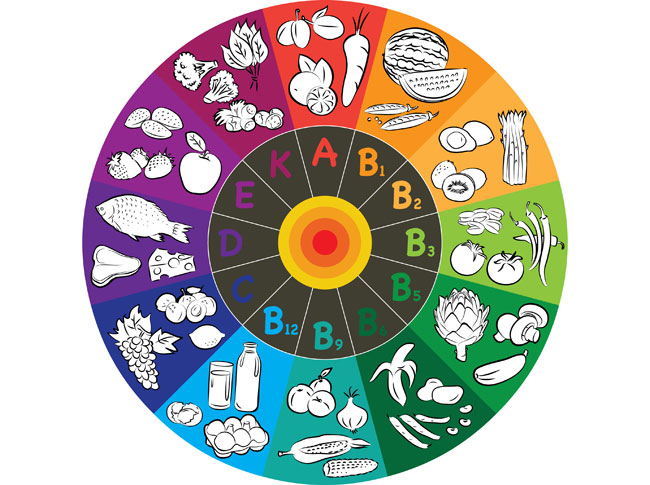
The 13 essential vitamins are:
Vitamin A
Vitamin C
Vitamin D
Vitamin E
Vitamin K
Vitamin B1 (thiamine)
Vitamin B2 (riboflavin)
Vitamin B3 (niacin)
Pantothenic acid
Biotin
Vitamin B6
Vitamin B12
Folate (folic acid)
And they are grouped into two categories:
The four fat-soluble vitamins are vitamins A, D, E, and K. Fat-soluble vitamins are stored in the body’s fatty tissue – and stay longer.
The nine water-soluble vitamins must be used right away. Any left-over water-soluble vitamins leave the body through the urine. Vitamin B12 is the only water-soluble vitamin that can be stored in the liver for many years.
 Paleo-opolis