
Every viewpoint, or blog, needs to set some basic parameters in order to stay consistent. This blog is to be about us, as humans, and how technology often assumes our infinite ability to adapt to its innovations and advancements.
The basic concept is this: Let’s take a man, whom we will name Steppen, and let’s place him in his natural environment, anywhere in Europe, Asia, or America – about 10,000 years ago. Let’s take a look at what science tells us about the path of evolution that got him there, both physical and dietary. Let’s also take a look at his current surroundings, his tools, his society, and his circumstances. And it might help you to do this if you realize that, unless you are of entirely African descent, or you are of Virgin birth, you actually do have a real ancestors (hundreds of thousands of them), who were living at that time, maybe not far from Steppen. I just happened to choose one, and give him a name, and I will also give him a roaming area, around what would now be central Germany.
For the perspective we will take, Steppen is a type of blank-slate in both a biological and a technical way. His tools are stone and wood, his diet is that of a nomadic hunter and gatherer, and yet his physical being, meaning his bone structure, and his internal organs, are the same as my own. A doctor operating on either of us would hard pressed to find a difference. Steppen could be placed on a modern bus in downtown New York, and as long as he didn’t speak, no one would ever know that he had just time-traveled ten thousand years. He is a blank slate because parts of the world are about to learn to work with pottery and metals. Other places, a few thousand miles south of Steppen are on the verge of cultivating wheat. Steppen himself, has seen a man with a tame goat, an others who hunt with dogs. The world is on the verge of change, in every single aspect of Human daily life – and it will be driven by creative people who invent tools to overcome problems, both in farming, and engineering.
My desire is to let Steppen “live” the entire 10,000 years between now and then, and in doing this, see how adaptive he is to modern life – in particular, some of our tools, and some of our diet. I wish to see if certain ailments can be tied to the development of certain tools and/or foods.
My premise is that many of the tools, and many, many foods that have come into existence since Steppen was born, have come with nagging physical costs. Most of the ailments, or impairments are not as easily linked as tennis was to tennis-elbow, or carpal-tunnel syndrome was to keyboard design and repetitive wrist motions. Mainly because many ailments develop over the course of years, or they are compounded by multiple issues and the linkage is not so apparent – especially in the area of diet.
We can reconstruct some realistic views, scientifically based, of how Steppen reacts to, and is “shaped by”- manipulating tools, running in cushioned or heeled shoes, sun glasses, setting his day by clocks, using a toilet instead of squatting, but especially in the arena of food. But the term “shaped-by” is key here, because Steppen’s DNA is not changing to accommodate these new entries to his life, nor has mine – for the most part, Steppen’s DNA is my DNA, and after 3 million years, my DNA is still less than 3% different than the Great Apes. And with minor exceptions, Steppen’s DNA is yours too.
The difference between what Steppen ate, and what we (as a society) currently eat, is vast. Anyone who has ever watched a survival show has become aware of how sparse, in real life, edible vegetable matter is. Steppen ate whatever greenery the tribe thought was safe, mixed with a very steady diet of meat. Rabbits, squirrels, deer, boar, birds, snakes, and whatever the tribe, as a whole, could catch – and very importantly, they ate almost the whole animal, not just the muscle. They also ate nuts, berries, bugs, fish, and eggs. They were a very healthy tribe. Steppen had many children. I am thankful for at least one of them that learned to survive the beasts, and forests of Germany not that long ago.
I wish to discuss Steppen’s dietary dance when he is introduced to milk (about 8,000 years ago), wheat (only three thousand years ago), grains, alcohol, and then sugar as a product (500 years ago!), then maybe all the way up to GMO’s – who knows? There is so much food that will be brought from the four corners of the earth to Steppen’s plate during our 10,000 year span. Corn, tomatoes, apples, many fruits, and the like won’t get to Steppen’s plate until the last few hundred years.
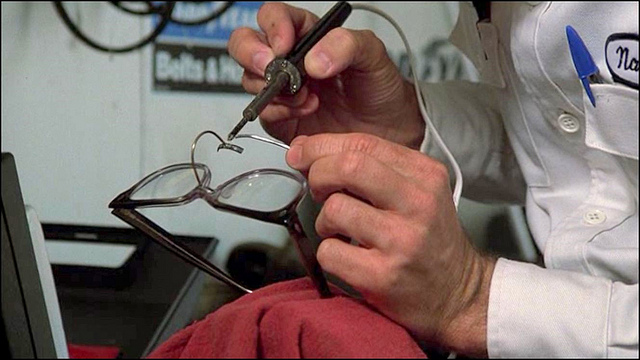
The assumption of many of the inventors of the world seems to be that we, as Humans, can adapt. We can eat anything, we can accessorize our bodies with bio-aids, and in fact, “that which does not kill us, makes us stronger…” That being said, not every inventor/innovator knows the true, full, and final fruition of his, or her, good intentions. For me, the classic parody of such an event is in a 1979 Steve Martin movie called “The Jerk” in which the main character invents a pair of eye-glasses that have a handle built into the nose bridge – an obviously handy adaptation. The down-side came when people started going cross-eyed because their eyes were inadvertently drawn to the new handle between their eyes. After initial success, the product failed, and the inventor was sued. The important and relevant parts that stuck with me were 1) that the side-effect did not always immediately follow the use of a new invention, and 2) that salespeople are rarely aware of the possible side-effects of a product.
I’m interested in Steppen’s perspective. I think we, our current society, has taken the multitude of inventions and their changes, in small increments, over thousands of years. And in doing so over such a long span of time, have not seen how drastic the total amount of change has been. It seems, in a state of delusion towards time, especially regarding how old we gauge the Human chain of events to be, – That we have come to believe that our “recent” intellectual growth has somehow triggered corresponding physical changes. I think that is wishful thinking.
I love technology that does not hurt me, so I am trying to devise a perspective that will identify the things that might.
This blog hopes to remain understandable, scientifically substantiated, and relatable to everyday life. It is a Book, chapter by chapter, but in Blog format. So… a Blook?
 Paleo-opolis